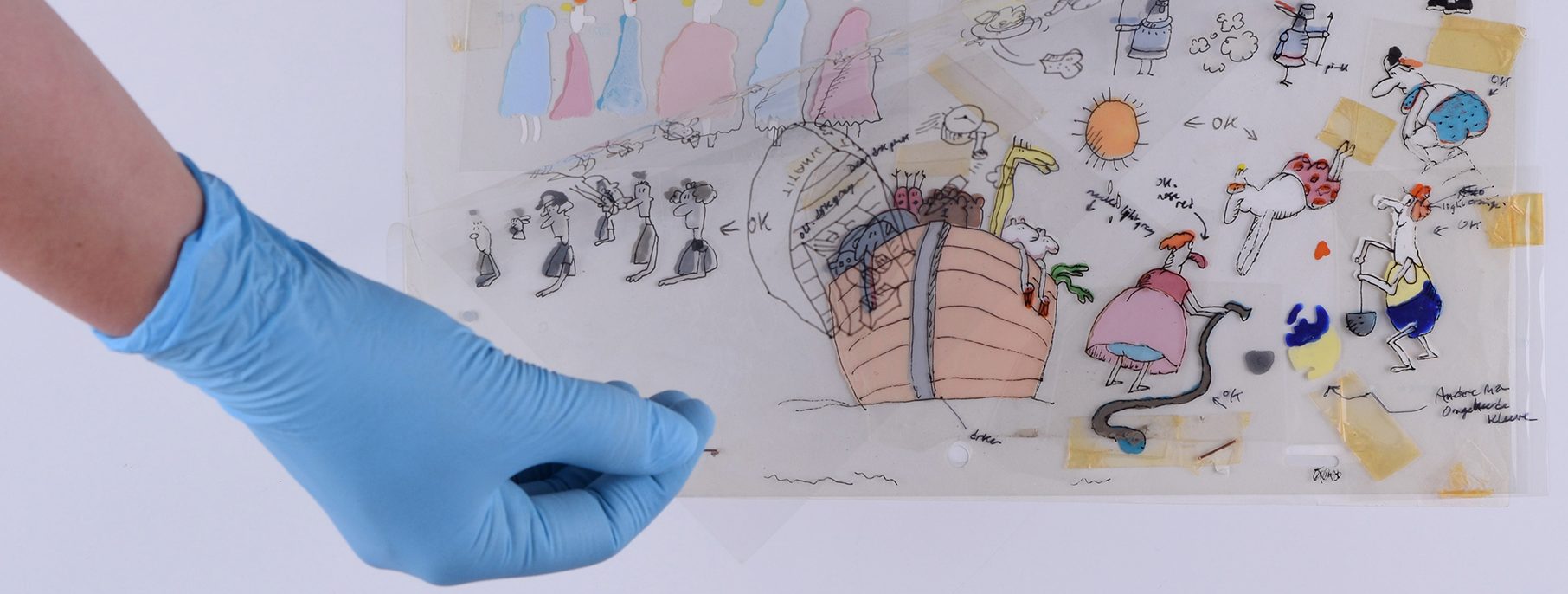
Eye Filmmuseum in Amsterdam has a new permanent exhibition dedicated to artwork: the animation gallery. Presenting artwork by leading Dutch animators, the exhibition highlights five analogue animation forms: puppet films, cel animation, rotoscoping, direct-on-film animation, and mosaic animation. Eye’s animation collection has grown enormously in recent years, with a significant donation of animation cels from the Netherlands Institute for Animation Film (NIAF) in 2013. Furthermore, in 2021, Eye received an impressive donation of over 700 puppets used in the renowned puppet films of the Geesink Studio. With this extensive collection of artwork, Eye now offers the public an opportunity to discover the craft of analogue animation films.
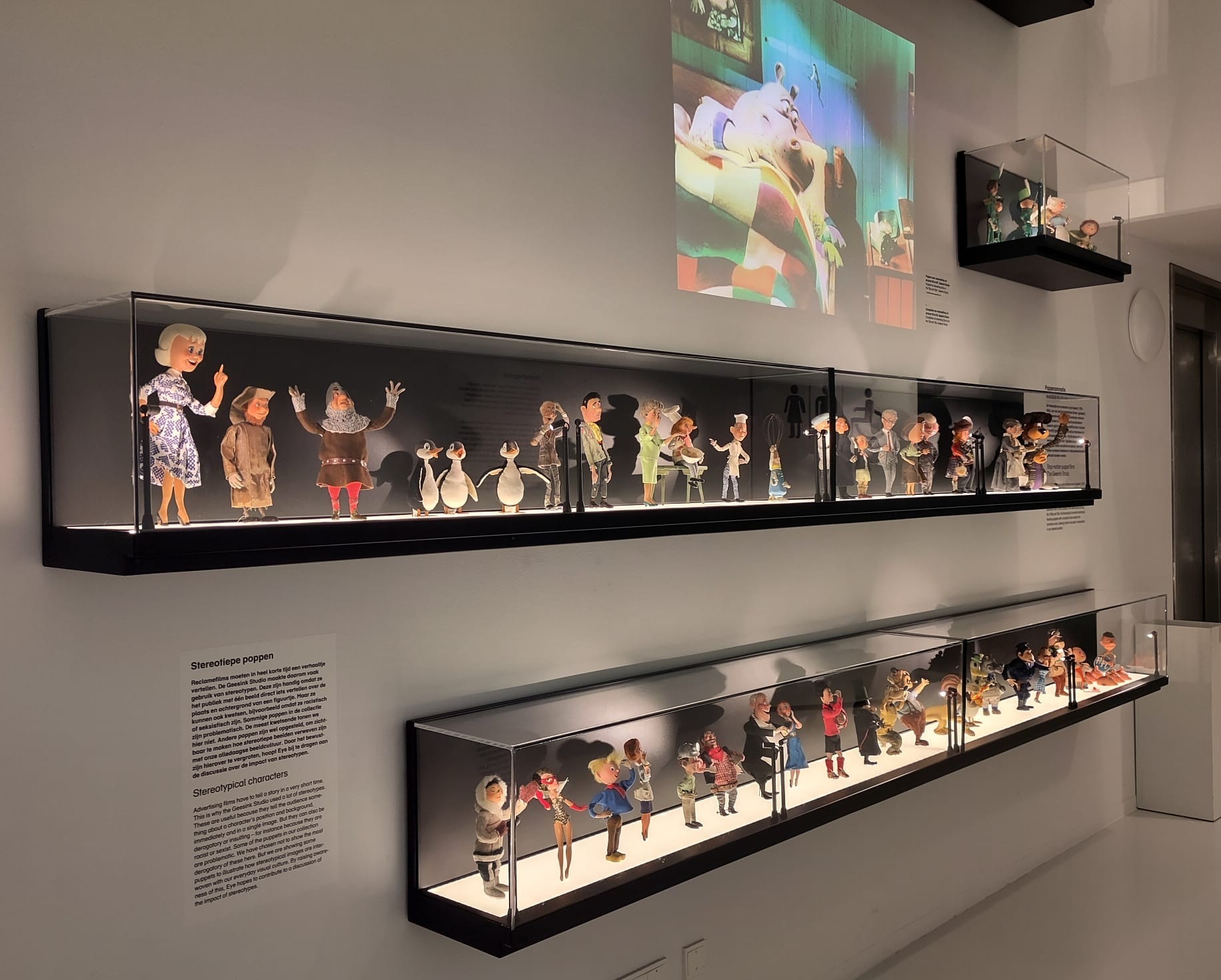
The technique of puppet films is presented through the puppets of the Geesink Studio. Producer Joop Geesink (1913-1984), also known as “the Duivendrecht Disney,” made hundreds of commercials for cinema and television in the 1940s, 1950s, and 1960s. The studio specialized in creating captivating stories within the limited timeframe of 20 to 60 seconds, a skill that allowed him to stay ahead of his competitors. He made commercials for clients from all over the world. In the United States, in the 1950s, people spoke of “the Geesink technique,” which refers to professional animation techniques and art direction. A selection of approximately 60 puppets is on display in the animation gallery.
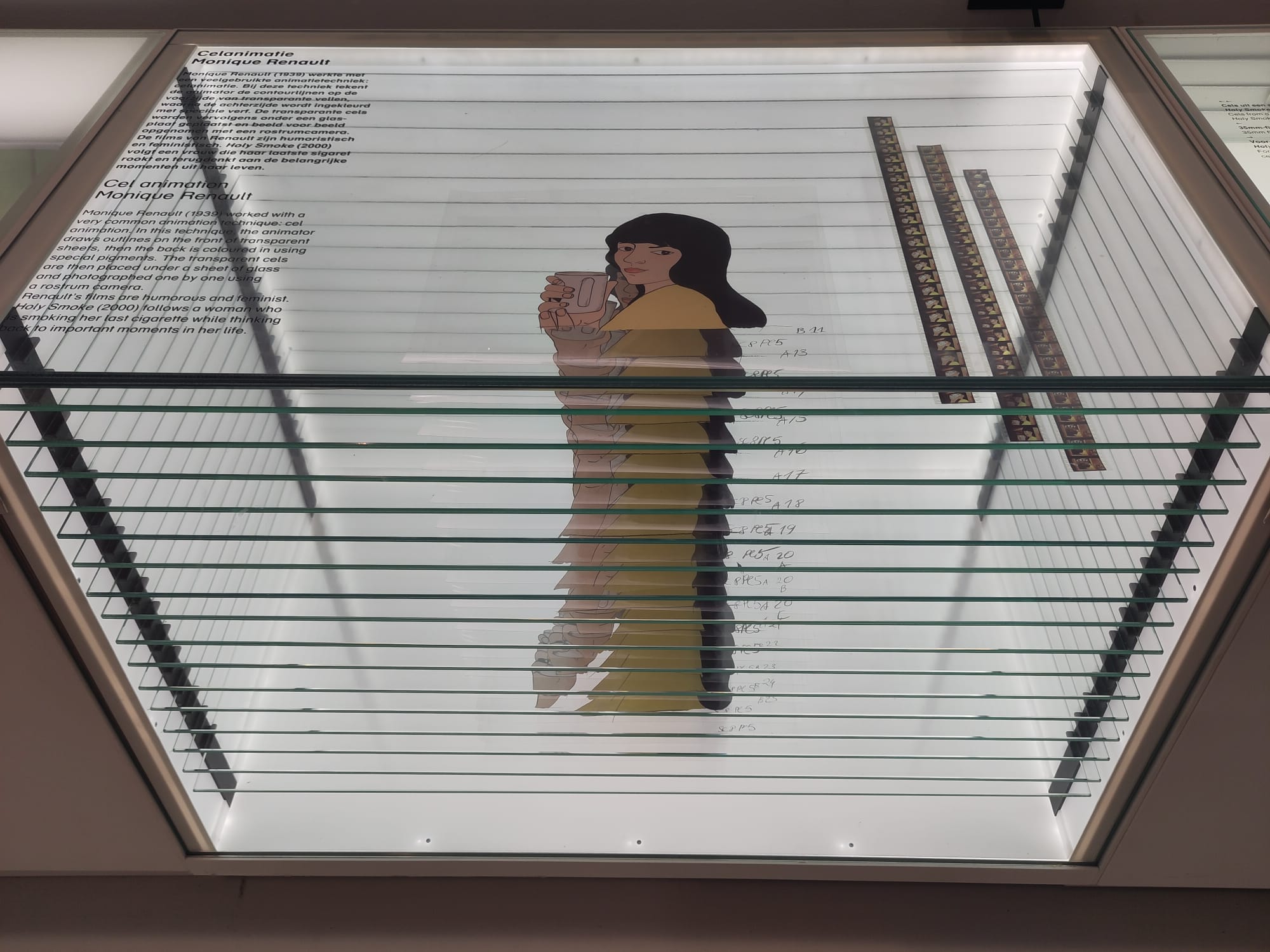
Cel animation is explained with the artwork of the film Holy Smoke (2000) by Monique Renault (1939). Holy Smoke revolves around a woman writing a letter and recalling the most important cigarettes of her life. Renault’s films often have an activist and feminist perspective. The animation gallery presents a sequence of 16 cels stacked on top of each other in a glass display. In another display, the audience can create their own image by correctly superimposing three cels from Holy Smoke—the foreground and background cel and a cel with a figure in between.
The rotoscoping technique is explained with the film I Move, So I Am by Gerrit van Dijk (1938-2012). Van Dijk was an internationally acclaimed animator and artist. Van Dijk made extensive use of rotoscoping, such as in his film I Move, So I Am (1997). Remarkably, both the original live-action footage, the drawings (pencil on tracing paper), and the final film are in the Eye collection. One of the original drawings is on display in the animation gallery. A video explains how the rotoscoping technique works.
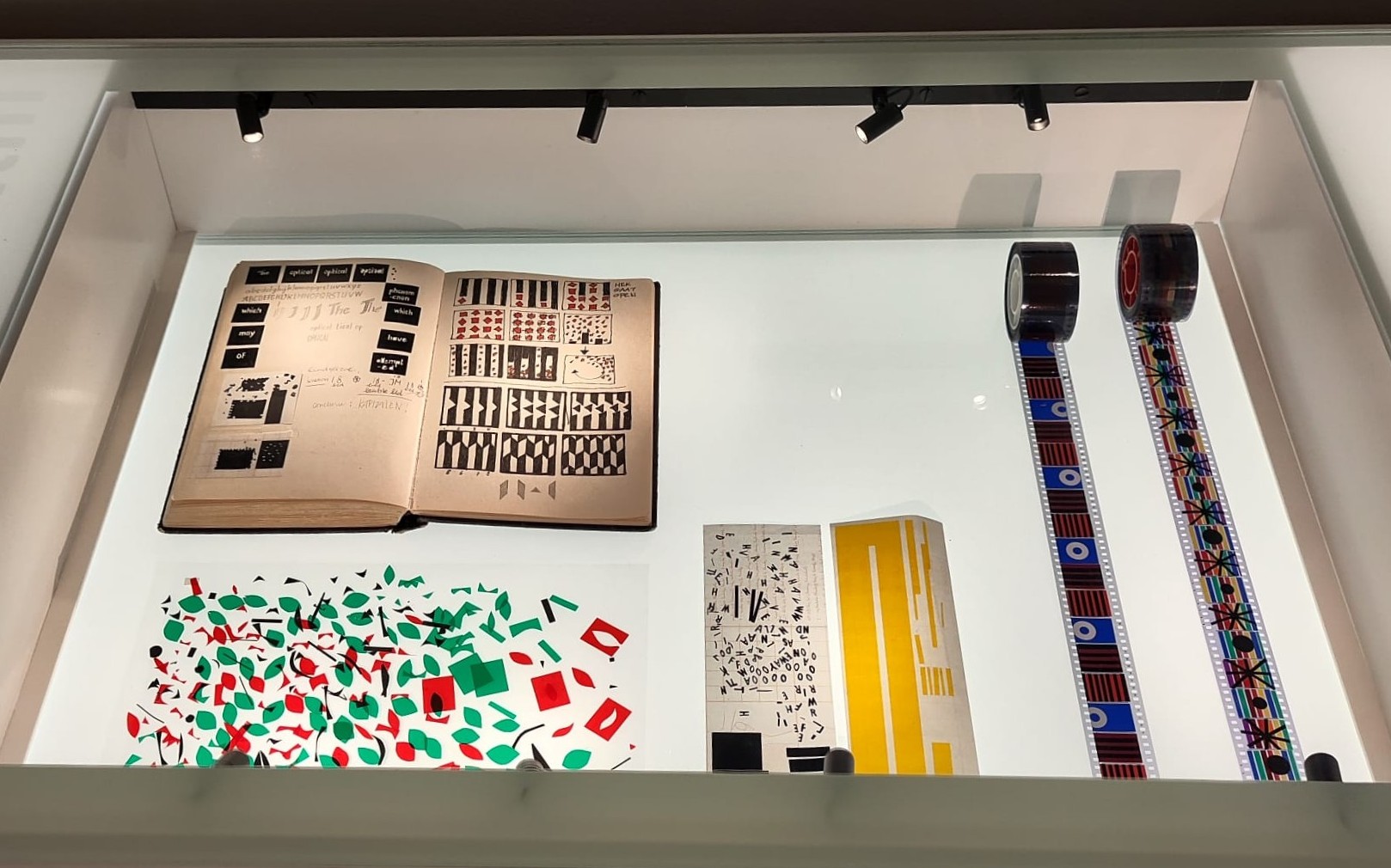
Direct-to-film animation (or cameraless animation) can be admired in the work of José Vonk (1949). Vonk creates abstract, handmade animations in which figures are cut out of foil and applied directly to the film strip. The exhibition features the artwork for her film Fences (2009). The title refers to the ‘fence phenomenon’, first observed in 1821. When a wheel passes behind the vertical bars of a garden gate, an optical illusion is created. José Vonk recreates this phenomenon with graphic forms. The display case features two rolls of work materials, as well as a workbook and several sheets of the film she uses.
Finally, the mosaic animation by Maarten Visser (1929-2009) is on display. Inspired by Roman floor mosaics and the music of Bach, classical languages teacher Maarten Visser (1929–2009) spent forty years in his spare time developing a unique animation technique that uses coloured mosaic tiles within a frame. The tiles are moved individually by hand, and each change is recorded frame by frame. Visser’s intention was to create visual music through “two-part” compositions of colour and form that develop across the plane. Visser’s abstract animated films remained largely unknown. His work was only shown at some festivals and private gatherings. After his death, Visser’s family donated 50 films, mosaic panels, and sketchbooks to Eye Film Museum. The animation gallery displays one of the mosaic panels alongside one of his films.
All films whose artwork is presented can be viewed on Eye’s streaming platform, the Eye Film Player. Access to the animation gallery is free.
Spelling error report
The following text will be sent to our editors: